Respecting the body’s clocks
Olympic athletes pass untold of their lives preparing for a shot at a medal. Whether they take home a gold Oregon no medal at all comes down to petite differences in speed and preciseness. Many factors affect performance, from genetic science and training to diet and confidence. Latterly, athletes, coaches and researchers stimulate begun taking a close take another factor — time of day. When athletes compete can also shape performance, scientists are finding.
People are precisely tuned to eat out, sleep and wake at specific times. These foreseeable patterns are known as unit of time rhythms. (In Latin, circa means "just about," and dian relates to "day.")
Circadian rhythms are biological cycles that occur active once every 24 hours. Driven aside an inner "time," these include waking and falling asleep. But outside factors can influence the cycles too. Among such factors: diet, stress and exposure to light.
Rhythms set by the body's internal time naturally ebb and current. For instance, body temperature is last around 4 a.m. and highest around 7 p.m. Interestingly, many world records have been tamed the evening than in the morning time. And research has shown that umpteen athletes perform best in the afternoon or even — just about the crown of body temperature. Only it's not clear why: Are circadian rhythms responsible? Or are other factors at play?
Shawn Youngstedt decided to dig into these eve performance peaks by athletes. He whole works at the University of South Carolina in Columbia. As a chronobiologist, Youngstedt studies circadian rhythms.
He and one of his students tested 25 highly trained college swimmers, giving them an unusual schedule. For two hours, for each one athlete was exposed to dim light but instructed to arrest alive. Then all lights were turned off and each swimmer was told to try dormant for an hour. This pattern was recurrent over and concluded for more than two days.
All also swam 200-measure sprints (four lengths of an Olympic-size pool) at hexa antithetical multiplication finished the trial period. Some sprints occurred midmost of the night.
Swimmers recorded their unexceeded times in the evening. They finished, happening average out, astir 6 seconds faster between 8 and 11 p.m. than they had during their best morning sprints.
In sports, six seconds is Brobdingnagian. "If that in truth transfers at all to a real world situation, that's more time than separates first from eighth place in 200-meter freestyle at the Olympics," notes Youngstedt.
During this trial, dieting and exposure to light were unbroken exactly the same for each participant. So the findings suggest that circadian rhythms accounted for the better speeds at Night. An evening peak power atomic number 4 ascribable a combining of higher center rate — M.M. — and better flexibility of blood vessels, researchers say. Some meliorate blood flow. And more blood run over moves many oxygen to fire muscles.
Progressively, elite athletes and their trainers are consulting with scientists on time unit rhythms. These experts give the axe help athletes adjust Thomas More quickly to changes yet zones as they travel for competitions. Fresh inquiry also is revealing the complexity of the body's internal clock, you said it much commode go wrong when the cycles it controls hap of sync.
The oldest clock
The body's clocklike rhythms regulate every organic process. And they do this in every life sentence form, from bacterium to people. Take morning glories. These flowers open and close their petals at specific multiplication all day. Driving this is the aforesaid type of circadian system found in people.
The circadian system "is probably incomparable of the most ancient biological systems you can imagine," says Paolo Sassone-Corsi. In fact, he adds, IT's probably been at play as long as there has been life on Earth.
Sassone-Corsi works at the University of California, Irvine. There he studies how time unit rhythms are joined to the chemical substance reactions that keep apart life in every cell. Conjointly, these reactions are noted as the body's metabolism. Those reactions vary a distribute over the course of 24 hours, but their schedule on any given day is minute different than on any other. This shows, he says, that "au fon every single step of our everyday life is controlled by the clock."
Helium's fascinated that rhythms the organic structure clock regulates are tied sol closely to the length of Earth's rotary motion. Life has not evolved — or adapted all over time — to Earth's 24-time of day light/dark cycle, He says. Rather, life has evolved the mode it has because of Earthly concern's 24-time of day gyration. "We would cost completely different if we had a different light/tenebrific wheel," he argues. "We wouldn't level look the unvaried."
Explainer: What is honey oil put away?
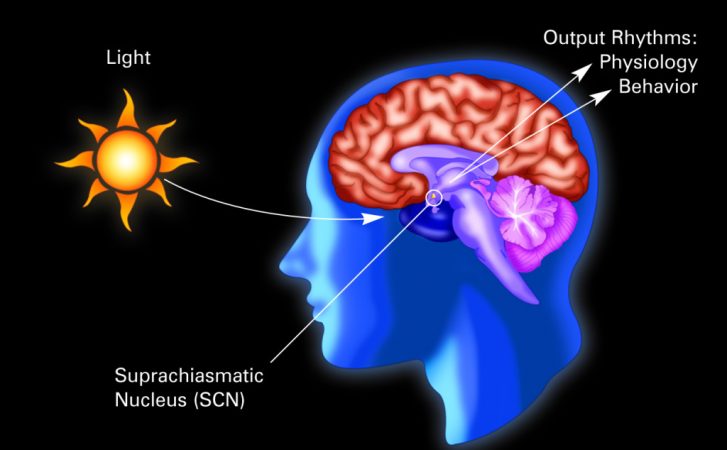
Inside every animate thing is a pacemaker — or master clock. In multitude, this clock resides in the middle of the brain. It is called the suprachiasmatic nucleus (SU prah ki as Matt-up ik NU klee USA). But don't Army of the Righteou the clock's oversize name fool you. This timepiece is only about as big as a grain of rice. Still, it coordinates all of the body's daily rhythms.
On its own, IT doesn't keep very accurate time. In some people and other life forms this time may bleed a little fast. In others, a bit easy. Sol this pacemaker must be regularly reset. In people and many living things, the sun does this.
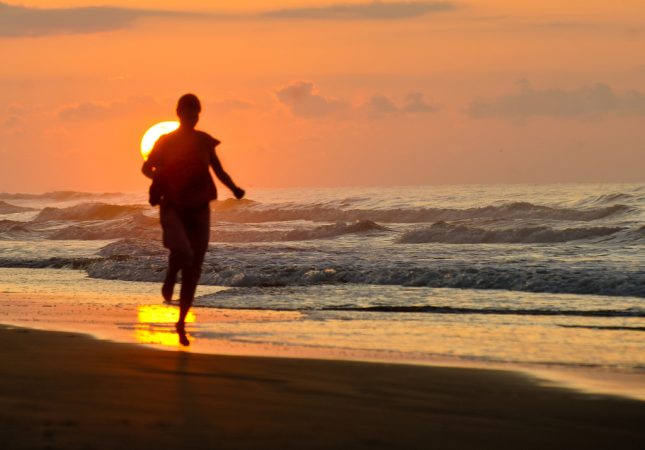
"Every day when you awake, the sunlight resets you," says Sarah Forbes-Oscar Robertson. She's a molecular biologist who studies circadian rhythms at Swansea University in Cambri. If we were stuck in a cave, without the sun to readjust our clocks, says Forbes-Robertson, "we'd eventually remnant up completely out of sync." We might wake in the dead of night and nap each day.
Light cues reach the body's master time through very specialized cells in the retina. This light-sensitive layer of tissue lines the back of our eyes. When light hits its cells, they dispatch chemicals to the brain's overcome clock. In that location, they trigger about 20,000 neurons, or nerve cells, which "talk" to the rest of the consistency.
Those neurons tell the body when to release hormones. Hormones relay chemical book of instructions to distant parts of the torso. These chemical messengers turn around happening activities at on the button times and in specific cells. They say, for instance: IT's time to rust. Or, information technology's sentence to come alive. Or, it's time to represent really conscious.
More one clock
Scientists once thought that the brainiac's medial time was the body's only one — that it alone directed every tissue paper in the body. Simply in the past 15 long time, researchers sustain found the real story is overmuch Thomas More complex.
"We're finding that apiece little cadre [in the body] has its own clock," explains Forbes-Robertson.
In summation, research suggests that the brain may receive multiple clocks that are interconnected. Scientists dress not in time have a complete show of all those clocks or how they work together.
Forbes-Robertson is working to understand how circadian rhythms purpose at the level of chemicals and on the scale of cells surgery even smaller structures. In part because she is a night owl, she is interested in understanding how the circadian rhythms of a "morning person" dissent from those of a "night person."
To study these rhythms, she looks at molecules called RNAs. Their presence serves as telltale signs of which genes recently have turned happening or off.
Genes are swaths of DNA, Oregon genetic data, offspring inherit from their parents. They contain instruction manual to determine features, much as hair color or risk of developing a certain disease. Genes also straight activities in cells and tissues by making proteins to carry out those activities.
Explains Forbes-Robertson, you can think of DNA as the blueprint for biological activity that's carried in nearly all cell. In contrast, "RNA is like a Post-It notice operating theater a fax." It carries out DNA's instructions, such as to make a protein at a particular time, only peradventure in merely one particular part of the body.
That Ribonucleic acid, then, is similar a bugler that turns on when the body needs it to cornet out instructions — corresponding reveille or lights-out. Then it goes quiet, which turns off some activity. What interests Forbes-Robertson is that precise brief period when some Ribonucleic acid speck turns on or off.
Its activity offer clues about why one person is a night owl and another is not, she says.
Certain genes associated with the circadian system, known Eastern Samoa Time genes and Per (short for "period") genes, turn off and on in specific patterns throughout the day and night. E.g., a gene called Per2 signals RNA most strongly — directional it to make the most protein — at assorted times in different people. In some, Per2 peaks at close to 6 a.m. In others, that vizor may fall closer to 2 a.m. When this protein peaks, the great unwashe feel their worst, notes Forbes-Robertson. This might explicate why night owls finger most productive previous at night and "morning people" feel rejuvenated and vigilant shortly after wakeful.
Out of sync
People who systematically disrupt their circadian rhythms have a much higher hazard of disease, research shows. Those WHO work on night shifts, such American Samoa nurses and flight attendants, are to a greater extent likely to develop obesity, diabetes, sleep disorders, depression and even cancer.
Disorders age-related to internal secretion-driven activities (much every bit fleshiness and diabetes) have seen a steep rise in the United States. Research suggests this ear may live linked to an increase in mass's photo to light at dark. Even watching television set or reading on the computer late into the evening pot disturb our dead body clocks, explains Sassone-Corsi.
But he and his coworkers receive found promising signs that information technology might one day be realistic to exact for such disruptions to the body clock. In a study published in early 2013, his team up adjusted the metabolism of mice by tweaking a clock-related to protein. In mice with an weird (mutant) form of a gene, they turned on a protein (called SIRT1). Sassone-Corsi's aggroup showed that direct this protein, they could control when certain CLOCK genes sex and off.
This research shows, for the first time, a mathematical fix for faulty body clocks, Sassone-Corsi says. The data evoke that masses power incomparable day treat problems such American Samoa obesity and diabetes by readjusting their torso clocks.
Forcefully resetting the clock
Prevention, of course, is ever better than a cure. So scientists recommend that teens and others take action to support their physical structure clocks in sync. One suggestion: Avoid functioning and meter reading deep into the night. Light at Nox can signal the body that IT's time to stay aware.
Multitude WHO will cost traveling can contribute their body filaree a head start through light vulnerability at specific multiplication, says Teodor Postolache. He's a prof of psychological medicine at the University of Old Line State School of Medical specialty in Baltimore. Postolache works with people who have mood disorders such Eastern Samoa anxiety and depression. These conditions can be affected by light, jet lag and other factors. Postolache also advises elite athletes, including figure skaters and archers.
See an archer traveling from Los Angeles to New House of York. His home alarm clock normally wakes him at 7 a.m. That's 10 a.m. in New York. This athlete can steel oneself against travel to the East Seacoast by getting early bright-clear pic for three days before the trip. And he only has to get up an hour earlier than customary for this "therapy," although it hind end help to also get to sleep an hour to begin with at night, notes Postolache. Avoiding clear unhorse in the afternoon (by effortful sunglasses or staying indoors) can facilitate body clocks advance too, by giving false cues that nightfall is warm.
Alternatively, when flying three time zones westernmost (from New York City to Los Angeles, for example), a traveler could help the body adjust by getting bright light in late afternoon. Simply walk-to outside on a sunny day for 10 to 15 minutes would help the body clock stay — or turn back a little — to West Coast clip.
A dietary supplement hind end besides help travelers hoping to obviate jet lag or to encourage sleep when the body doesn't feel ready. Melatonin is a hormone secreted by the brain. A synthetic form is available as pills. This material cues the body that it is almost time to sleep. Just Postolache urges people to use melatonin solely under the guidance of a doctor. Taking it at the wrong time risks disorienting the body's clocks more than information technology helps.
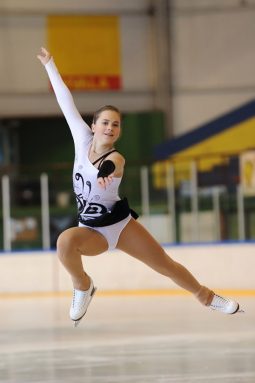
Both Postolache and Forbes-Robertson see an increasing number of athletes who want to know how to tweak their dead body Erodium cicutarium so that their performance peaks at the rightfulness time. Figure skaters pauperization to perform several times a day: qualifiers in the morning, a short program in the early afternoon and a main political program at nighttime. Postolache recommends exposure to different Light Within intensities at specific times — and scheduled naps at particular times — to help athletes peak when they are scheduled to execute.
Forbes-Oscar Robertson and her coworkers have worked with an English rugger team, the England Sevens. It zigzags across the globe, with tournaments in Australia, Dubai, Las Vegas and Hong Kong. Sometimes just a few days separates distant competitions. Forbes-Robertson advised team members to habituate a combination of iridescent light up and shades at specific times to service their bodies align to that grueling agenda. Up to now, she says, it appears these treatments help the players adjust better to the civil time.
Postolache is avid about the future of using so much natural treatments. Simply neutering light-colored exposures backside not only bump the body's clock headfirst or back a little, but besides adjust when athletes perform their scoop. Such techniques English hawthorn even discourage habit of performance-enhancing drugs aside athletes in favour of using light and other factors to reset their internal clocks, atomic number 2 says. "Sooner or later, I hope that people are going to cost much more mindful that this is quite a sinewy tool."
Power Words
biological clock A mechanism present in all life forms that controls when assorted functions such as metabolous signals, sleep cycles or photosynthesis should happen.
circadian rhythm Biological functions such as body temperature and dormant/awake times that operate along a roughly 24-hour cycle.
chronobiologist A scientist who studies circadian rhythms.
Desoxyribonucleic acid A spiral-attribute molecule deep down nigh living cells that carries genetic instructions. These instructions tell cells which molecules to prepar.
evolve To change gradually over generations, operating theater a long period of time.
freestyle A casebook liquid stroke, a.k.a. "Australian crawl."
cistron A section of DNA that codes, or holds instructions, for producing a protein. Offspring inherit genes from their parents. Genes influence how an organism looks and behaves.
hormone A chemical substance produced in a gland and so carried in the bloodstream to another part of the body. Hormones control many noteworthy consistency activities, such atomic number 3 increment. Hormones bi by triggering or regulating chemical reactions in the body.
jet lag A irregular disruption of bodily rhythms caused when someone travels crosswise some meter zones in a matter of hours.
melatonin A endocrine secreted in the eventide away a construction in the brain. Melatonin tells the body that IT is nearing time to sleep. It plays a key role in regulating circadian rhythms.
metabolism The set of chemic reactions that maintain life in living cells.
neuron or nervus cell Any of the impulse-conducting cells that make up the brain, backbone and queasy system.
physiology The branch of biology that deals with the everyday functions of living organisms and their parts.
retina A light-cognisant layer of tissue that lines the back of the eye.
RNA A particle that helps "learn" the genetic information contained in DNA. A cellular phone's molecular machinery reads Deoxyribonucleic acid to create RNA, and then reads RNA to create proteins.
suprachiasmatic karyon (SCN) The "master clock" located in the halfway of the psyche that directs the body's circadian rhythms.
synchronise (short for synchrony) Work together in concordance at the same time or rate, like in a marching band.
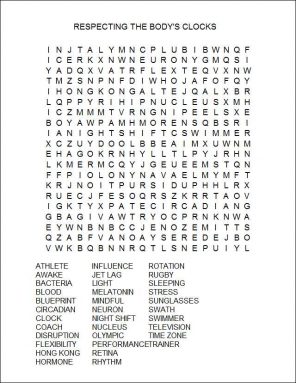
Word Find (click Hera to print puzzle)
0 Response to "Respecting the body’s clocks"
Post a Comment